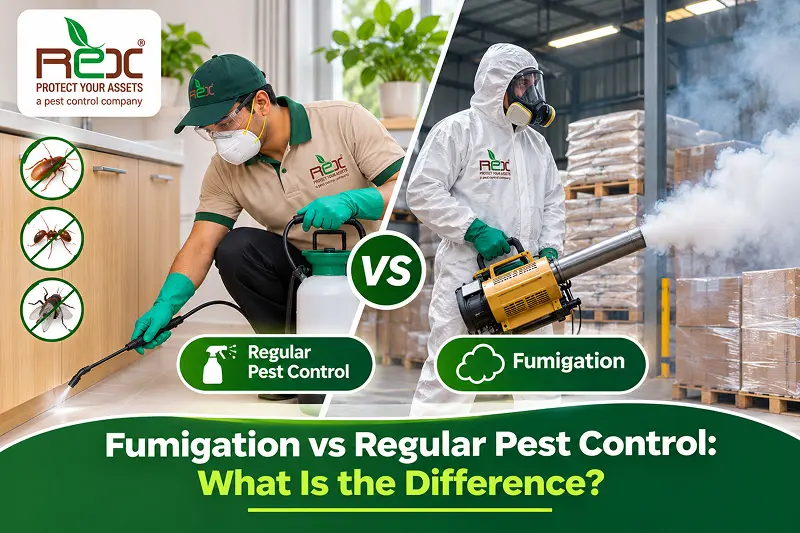
Fumigation vs Regular Pest Control: What Is the Difference?
The presence of pests in warehouses, storerooms or houses can pose one crucial question: is conventional pest control adequate or is fumigation necessary? Both approaches are used for pest management; however, these processes differ from each other and are applicable under specific circumstances. Knowing the difference between the two can help property owners select a proper solution without sticking to one technique for all cases. REX Environment Science offers pest management and fumigation services depending on the requirements of the premises, target pest and area.
Understanding the Two Methods
Regular Pest Control
Pest control services normally consist of examination and targeted application of chemicals to areas where pests reside, hide or enter. Depending on the pest type, the chemicals can be spray, gel, bait, trapping, or any other technique.
This process is often used when dealing with household pests like cockroaches, ants and other bugs. The treatment is carried out on the problem areas that attract pests to them.
Sometimes it is necessary to clean up, seal up any holes or gaps and remove any food or water sources that may encourage the pests to be there.
Fumigation
Fumigation uses a chemical substance that produces gases or vapours that can reach pests inside a sealed or well-controlled environment. It is conducted in specific circumstances, such as the treatment of particular stored goods and materials where the pests could be hard to target through surface application.
While a spray is focused on the area where the pests reside, fumigation requires planning as the gases are needed to reach the target treatment zone within the desired concentration period. Premises or goods are also required to be enclosed, monitored and ventilated according to the approved method.
Fumigation is not just any substitute for pest management practices. It depends on specific conditions of the pests and their treatment.
How Do the Methods Compare?
The main difference is how the treatment reaches the pest and where it can be used.
| Point of comparison | Regular pest control | Fumigation |
|---|---|---|
| Application | Targeted products, baits, traps or sprays | A fumigant introduced into a controlled space |
| Common use | Household and building pest management | Selected storage, commodity and enclosed-space treatments |
| Preparation | Depends on the treatment and affected area | May require sealing, evacuation and strict access controls |
| Safety measures | Follow product-specific instructions | Requires specialised procedures and trained professionals |
| Treatment choice | Based on pest activity and hiding places | Based on the pest, commodity, site and fumigant suitability |
Where Do Types of Fumigants Matter?
There are various types of fumigants for various fumigation treatments. For instance, phosphine can be used in some stored commodities and stack fumigation treatments. There could also be other types of fumigants that are allowed for use in certain conditions depending on the regulations.
This depends on the target pest, the material to be fumigated and the conditions of fumigation. The fumigant that can be used for one type of stored commodity may not be right for the treatment of furniture or buildings.
Fumigants can be highly hazardous if handled incorrectly. These types of substances should never be chosen randomly or applied without proper knowledge. These things should only be done by qualified personnel who would determine which products to use and apply them safely.
Which Method Should a Property Owner Choose?
For routine insect activity in a home or office, targeted pest control may be sufficient. If pests are found in stored goods or within a suitable enclosed treatment area, a professional may assess whether fumigation is necessary.
Before deciding between the two methods, consider the following:
- The pest involved: Different insects require different control measures.
- The affected material: Food commodities, furniture and building structures have different treatment needs.
- The size of the infestation: The extent and location of pest activity influence the treatment plan.
- Safety requirements: Occupants, workers, nearby areas and treated materials must be considered.
REX Environment Science offers fumigation and other pest management services, including stack fumigation. A site assessment helps determine which approach is appropriate for the specific requirement.
Conclusion
Fumigation and pest control both have different functions. Although specific treatments can be used to solve common pest infestations at home and businesses, fumigation can work well for some enclosed places and items. Understanding the types of fumigants and what their use is will make it easier to avoid choosing the wrong treatment solution. REX Environment Science can assess your pest situation and suggest a proper solution to the problem. Contact REX Environment Science now for fumigation services.
FAQs
Looking to get secure?
For fumigation services, contact REX Environment Science today!
Book Free Inspection
